 English
 Deutsch
 Italia
January 13, 2026
The Great Migration 2026: Complete Guide (Dates, Routes & Best Viewing Spots)
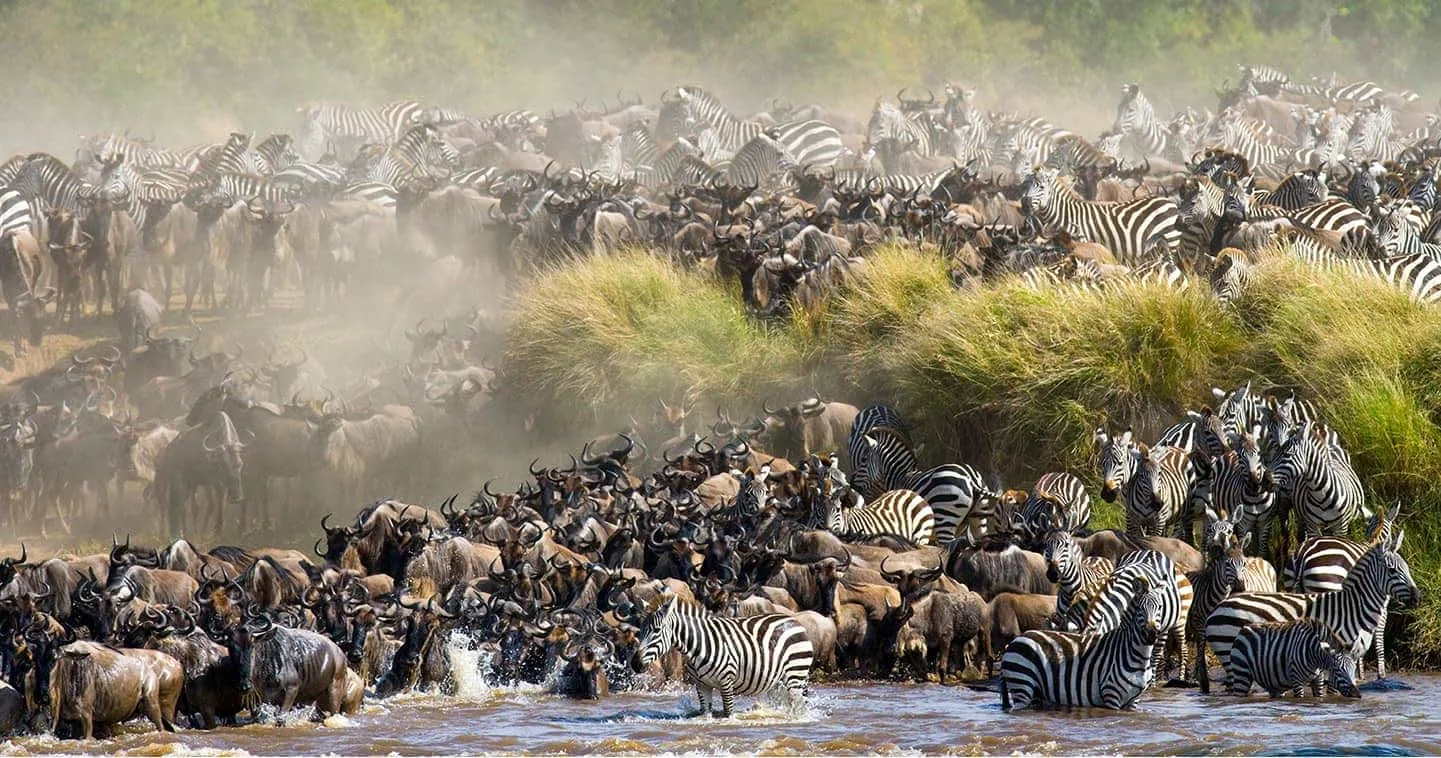
The Great Wildebeest Migration 2026 is set to be one of the most spectacular wildlife events on Earth. Over 1.5 million wildebeest, joined by zebras and gazelles, will thunder across the plains of Tanzania and Kenya in search of fresh grazing land, a raw, dramatic journey ruled by rain, predators, and survival.
If witnessing this natural wonder is on your bucket list, this complete Great Migration guide covers exact months, routes, river crossings, best viewing spots, safari tips, and when to book for the ultimate African safari experience.
What Is the Great Migration?

The Great Migration is an annual circular movement of wildebeest, zebras, and antelope across the Serengeti and Masai Mara ecosystem. It is driven by seasonal rainfall and fresh grass, making it unpredictable yet breathtaking.
The Great Migration involves over 1.5 million wildebeest, more than 300,000 plains zebras, Thomson’s and Grant’s gazelles, all closely followed by powerful predators such as lions, cheetahs, leopards, and crocodiles across Kenya’s Masai Mara national reserve and Tanzania’s Serengeti national park
Great Migration 2026: Month-by-Month Breakdown
January – March: Calving Season (Southern Serengeti)

From January to March , the calving season in Ndutu and the Southern Serengeti (Tanzania) brings over 500,000 wildebeest calves, intense predator action, and excellent photography opportunities, making it ideal for wildlife photographers and big cat sightings.
April – May: long trek (western Serengeti)

From April to May, during the green season with occasional rains, the long trek north in the Central and Western Serengeti showcases massive moving herds, lush landscapes, and fewer crowds, making it perfect for budget safaris and dramatic landscape photography.
June – July: Grumeti River Crossings

From June to July , the Grumeti River crossings in the Western Serengeti feature dangerous river crossings, thrilling Nile crocodile encounters, and the first major river drama of the season, making it ideal for adventurous travelers and documentary-style safaris.
July – October: Masai Mara River Crossings (Peak Season)

From July to October, the Masai Mara River crossings in Masai Mara National Reserve, Kenya feature iconic Mara River crossings, thousands of wildebeest plunging into crocodile-filled waters, and peak predator action, making it perfect for first-time safari travelers and luxury safaris.
November – December 2026: Return to Serengeti

From November to December , as herds return to the Eastern and Southern Serengeti, short rains begin, wildlife movements slow, and the safari season is quieter, making it ideal for peaceful safaris and great value deals.
Great Migration Routes Explained
The Great Migration follows a circular route, starting from the Southern Serengeti for calving, moving through the Central Serengeti, then the Western Serengeti for the Grumeti River crossings, up to the Northern Serengeti, across to the Masai Mara for the Mara River crossings, and finally returning to the Southern Serengeti, with exact movements varying each year depending on rainfall.
Best Places to See the Great Migration in 2026
Top Viewing Spots in Kenya
-
Masai Mara National Reserve
-
Mara River (Lookout Point, Kichwa Tembo area)
-
Mara Triangle
Top Viewing Spots in Tanzania
-
Ndutu Conservation Area
-
Central Serengeti (Seronera)
-
Western Corridor (Grumeti River)
-
Northern Serengeti (Kogatende)
Best Time to Book a Great Migration Safari (booking tips)

The ideal time to book a Great Migration safari is generally 6 to 12 months in advance, as the most popular months, particularly July through September, tend to sell out very quickly. This is especially true for luxury lodges, exclusive tented camps, and river-view accommodations, which are limited in number and highly sought after during the peak migration season. Booking early not only secures your preferred dates and accommodations but also allows for a wider selection of safari experiences tailored to your interests.
Great Migration Safari Tips
– Combine Kenya & Tanzania for full migration coverage
-Bring binoculars & a zoom lens
-Be patient river crossings can take hours
-Stay at least 3 nights in migration zones
Why Book Your Great Migration 2026 Safari with Cross Wild Safaris?

At Cross Wild Safaris, we specialize in:
-
Custom Great Migration itineraries
-
Guaranteed best viewing locations
-
Seamless Kenya & Tanzania safari planning
Frequently Asked Questions (FAQs)
Is the Great Migration guaranteed?
Yes; the migration happens every year, but exact timing and crossings depend on rainfall.
Is the Mara River crossing predictable?
No. Crossings can happen multiple times a day or not at all patience is key.
Is July or August better?
Both are excellent. August often has larger herds in the Masai Mara.
Conclusion
The Great Migration is more than a safari, it’s a once-in-a-lifetime experience that showcases nature at its rawest and most powerful. With the right timing, location, and safari expert, you’ll witness one of the world’s greatest wildlife spectacles in unforgettable fashion.


