 English
 Deutsch
 Italia
October 25, 2025
Where the Forest Meets the Snow: Mount Kenya’s Unique Ecosystems
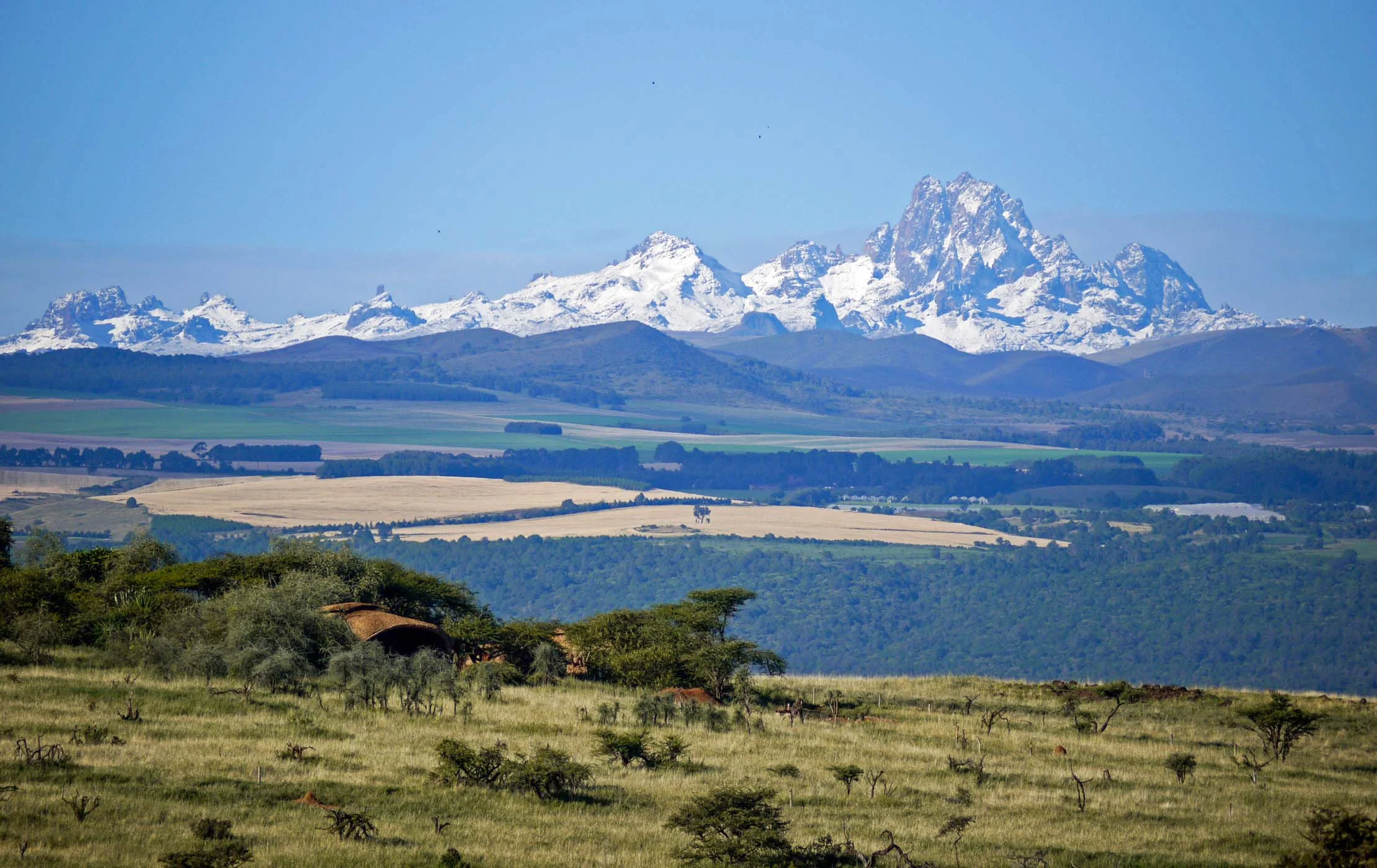
Towering at 5,199 meters, Mount Kenya isn’t just Africa’s second-highest mountain, it’s one of the most ecologically diverse places on the planet. Few mountains in the world can match its dramatic transition from lush rainforests to glacial snowfields, often within just a few kilometers.
This remarkable biodiversity gives rise to five distinct ecological zones, each hosting a unique array of flora, fauna, and natural wonders. It’s no surprise that Mount Kenya is a designated UNESCO World Heritage Site and a biosphere reserve.
Let’s explore the incredible Mount Kenya ecosystems and discover what makes this mountain a living masterpiece of nature.
1. Lower Slopes: Cultivated and Indigenous Forests (1,800–2,400m)

The base of Mount Kenya is a mosaic of farmlands, grasslands, and indigenous forests, with rivers flowing from glacial sources above. Here, you’ll find Afro-montane forests teeming with birdlife, butterflies, and monkeys.
The forests, home to notable species such as black-and-white colobus monkeys, African crowned eagles, and Jackson’s chameleons, also serve as vital water catchment areas that supply rivers like the Tana and Ewaso Nyiro.
2. Montane Forest Zone (2,400–3,000m)

The montane forests are dense, green sanctuaries filled with towering camphor, podo, and cedar trees. They also hide some of Mount Kenya’s most elusive wildlife, including leopards, giant forest hogs, and the rare bongo antelope.
These forests are characterized by a thick canopy cover, diverse bird species, and high rainfall with misty conditions.
3. Bamboo Zone (2,600–3,000m)

A narrow but vital belt, the bamboo zone acts as a natural barrier and transition layer. The thick bamboo growth provides food and cover for animals, particularly forest elephants and buffaloes.
Keep an eye out for elephant trails, fresh dung piles, and secretive antelopes moving quietly through the groves.
4. Heather and Moorland Zone (3,000–3,800m)

Here, the scenery changes dramatically. You’ll be surrounded by giant heathers, tussock grasses, and massive lobelia and groundsel plants, a surreal, almost alien-like landscape shaped by freezing nights and blazing daytime sun.
This area is unique for its adaptations to extreme temperature swings, serving as home to hardy species like rock hyraxes and malachite sunbirds, as well as rare Afro-alpine plants found nowhere else on Earth.
5. Afro-Alpine Zone and Snowfields (3,800–5,199m)

As you ascend beyond 3,800 meters, the vegetation thins out. You now enter the alpine desert and glacial zones, where only the toughest life forms survive. Ice fields, scree, and rock dominate the landscape, with occasional sightings of sunbirds feeding on alpine flowers. Ecological highlights include glacial tarns such as Lake Ellis and Lake Michelson, the final stretch of habitat before the summit, and areas of permanent snow with occasional ice caves.
Why Mount Kenya’s Ecosystems Matter
Mount Kenya’s ecosystems are not just visually stunning, they play a critical role in climate regulation, water supply, and biodiversity conservation. This vertical world of forests, moorlands, and glaciers supports:
-
Over 160 bird species
-
Endemic plants and animals
-
Key resources for local communities and wildlife corridors
The mountain’s rapid elevation gradient means you can experience nearly every type of climate from the equator to the poles in one trek!
Experience the Magic of Mount Kenya’s Ecosystems
At Cross Wild Safaris, we believe climbing Mount Kenya is more than just reaching Point Lenana or Batian, it’s about immersing yourself in one of Africa’s richest natural environments.
Our eco-conscious trekking adventures are designed to help you:
-
Explore all ecological zones with expert naturalist guides
-
Learn about indigenous flora and fauna
-
Enjoy sustainable, low-impact travel through protected landscapes
Whether you’re a climber, photographer, or nature lover, we’ll help you discover where the forest meets the snow and everything in between.
Contact US today to plan your personalized Mount Kenya expedition and explore one of Africa’s most awe-inspiring ecosystems up close.


