 English
 Deutsch
 Italia
January 13, 2026
Great Migration Myths vs Facts 2026: What Most Travelers Get Wrong
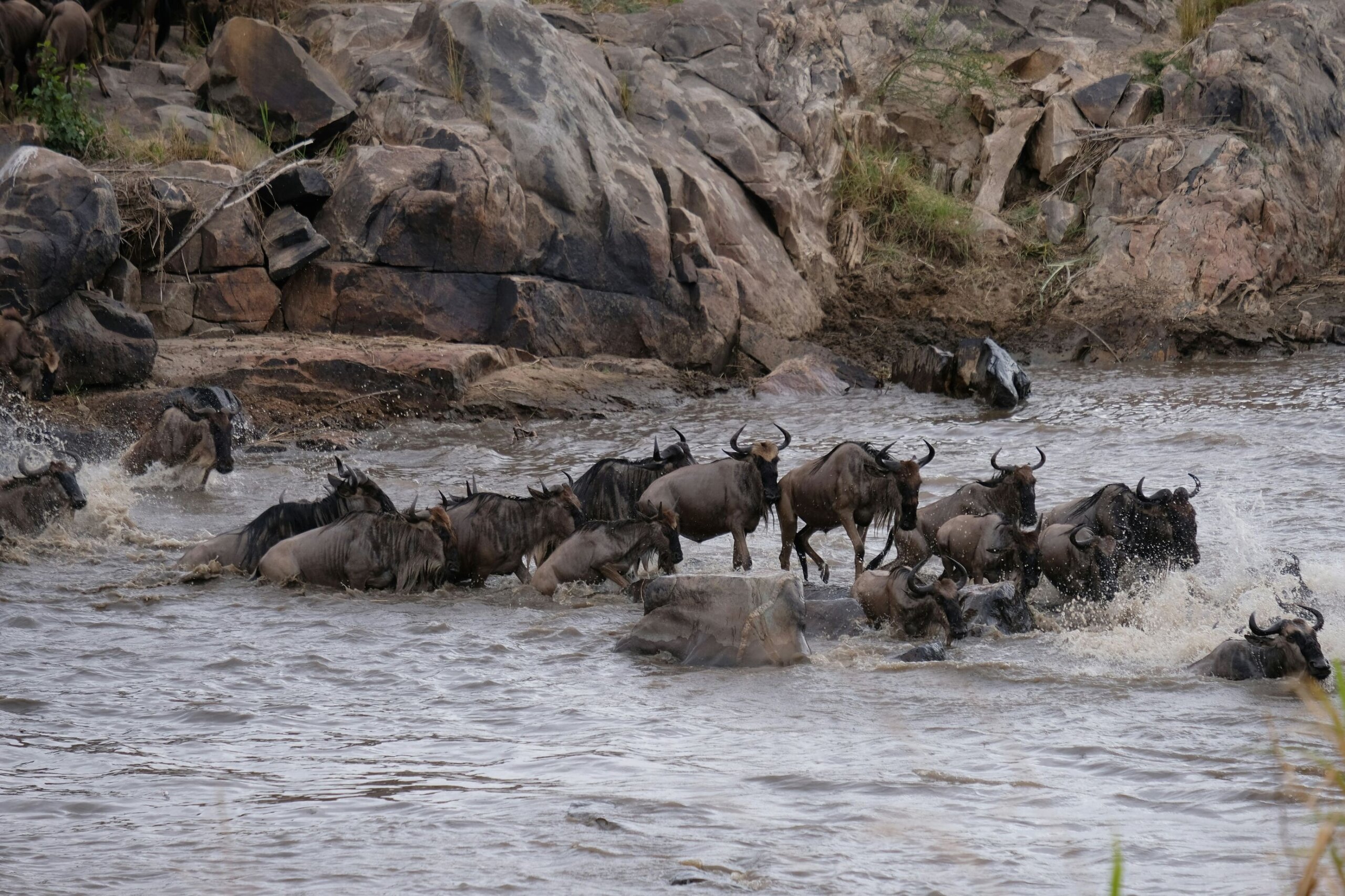
The Great Wildebeest Migration is one of the most talked-about safari experiences in the world and also one of the most misunderstood with different great migration myths vs facts out there.
Many travelers arrive in Africa with expectations shaped by documentaries, social media, and outdated information. So before you plan your safari, let’s separate myths from facts and clear up what most travelers get wrong about the Great Migration .
Myth 1: The Great Migration myth vs facts; Happens Only Once a Year
Myth
Many people believe the Great Migration is a single event that happens on one specific
Fact
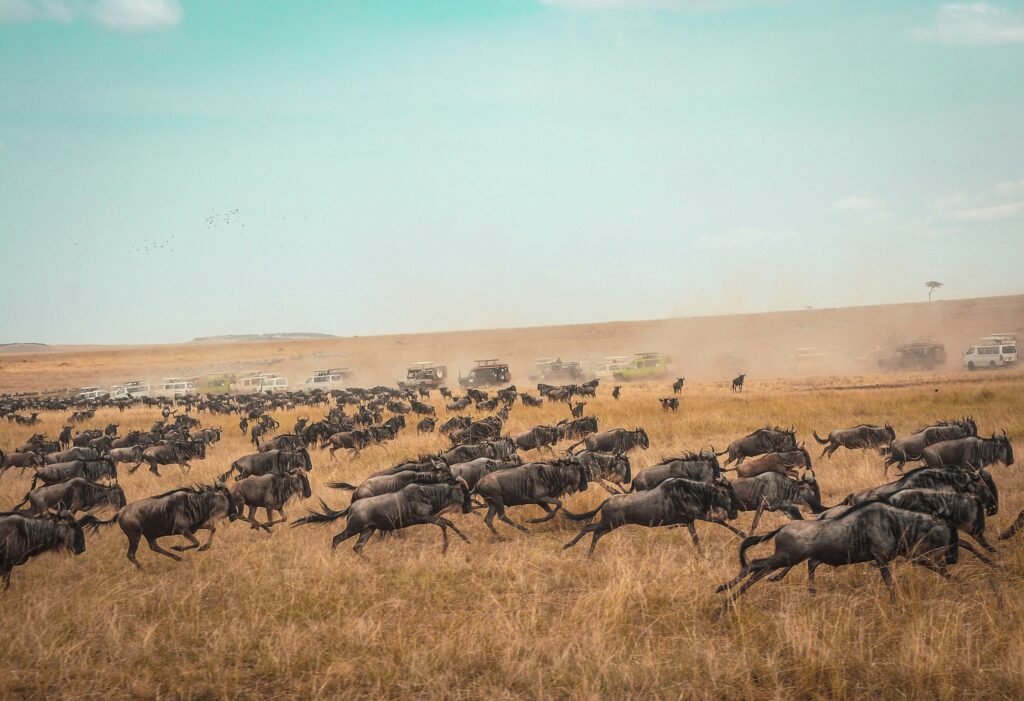
The Great Migration is a year-round movement, not a one-time event.
Over 1.5 million wildebeest and hundreds of thousands of zebras move continuously between the Serengeti (Tanzania) and the Masai Mara (Kenya) in search of fresh grass and water.
What changes is where the herds are at different times of the year not whether the migration is happening.
The Great Migration Myth vs Facts 2; River Crossings Are Guaranteed
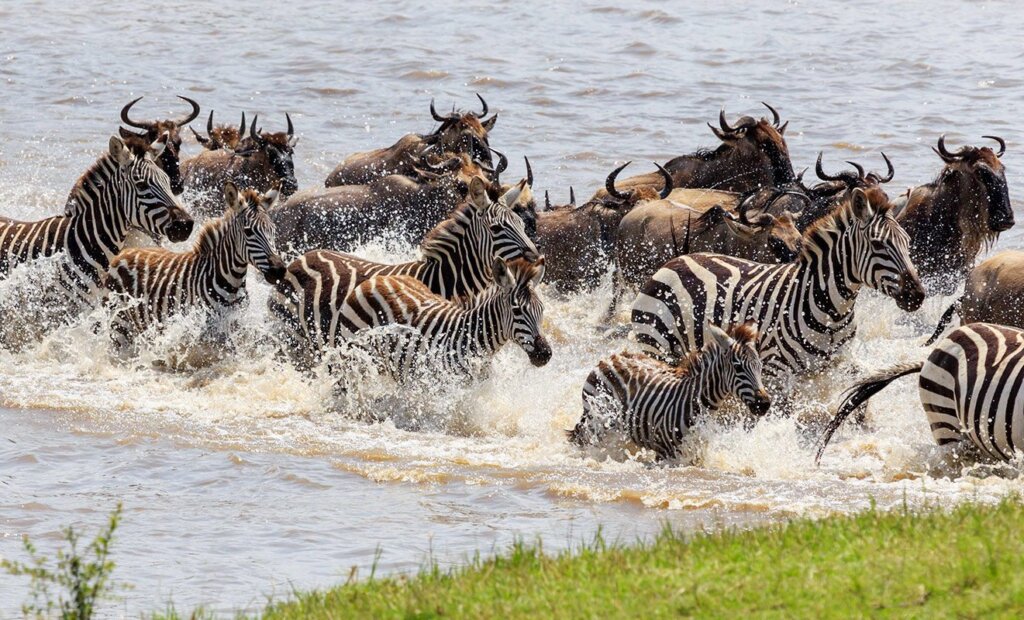
Myth
If you visit during peak season, you will definitely see a dramatic river crossing.
Fact
River crossings are wild and unpredictable.
While July–October offers the best chance to see Mara River crossings, animals may:
- Wait for hours or days
- Cross at unexpected points
- Turn back multiple times
Seeing a crossing is never guaranteed — but when it happens, it’s unforgettable.
This is why experienced local guides like ours make all the difference.
Myth 3: The Great Migration Is Only in Kenya
Myth- Many travelers think the migration happens only in the Masai Mara.
Fact- The migration takes place across two countries
Many travelers think the Great Migration happens only in Kenya’s Masai Mara, but in fact it spans two countries Tanzania’s Serengeti National Park and Kenya’s Masai Mara with the largest portion occurring in Tanzania during the calving season (January–March) and the long movement months (April–June & November–December), making both destinations essential to the migration story.
Myth 4: The Great Migration Is Too Crowded to Enjoy
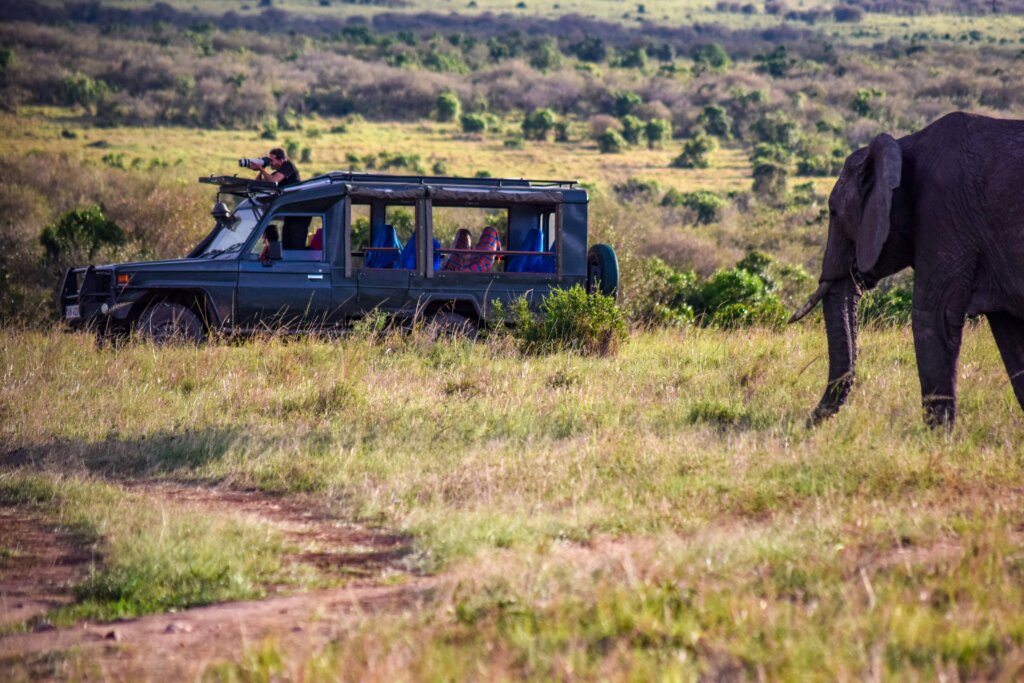
Myth- Some travelers fear too many safari vehicles ruin the experience.
Fact- While popular river crossing points can be busy, crowds are easily avoidable by choosing private conservancies, exploring alternative crossing locations, timing game drives for early mornings and late afternoons, and relying on expert route planning.
At Cross Wild Safaris, we design itineraries that maximize sightings while minimizing crowds.
Myth 5: You Must Visit Between July and September
Myth- Travelers believe that if they miss July–September, they’ve missed everything.
Fact- Every season offers something unique:
| Season | Location | Highlights |
| Jan–Mar | Southern Serengeti | Calving, baby animals, predators |
| Apr–Jun | Central Serengeti | Massive herds, dramatic landscapes |
| Jul–Oct | Masai Mara | River crossings |
| Nov–Dec | Eastern Serengeti | Fewer crowds, great photography |
There is no bad time to see the Great Migration only different experiences.
Myth 6: The Great Migration Is Only for Luxury Travelers
Myth- Many people assume it’s only for high-end, expensive safaris.
Fact –The Great Migration can be experienced on:
With proper planning, you can enjoy the migration at a price that fits your travel style.
Myth 7: Migration Sightings Are All About Wildebeest
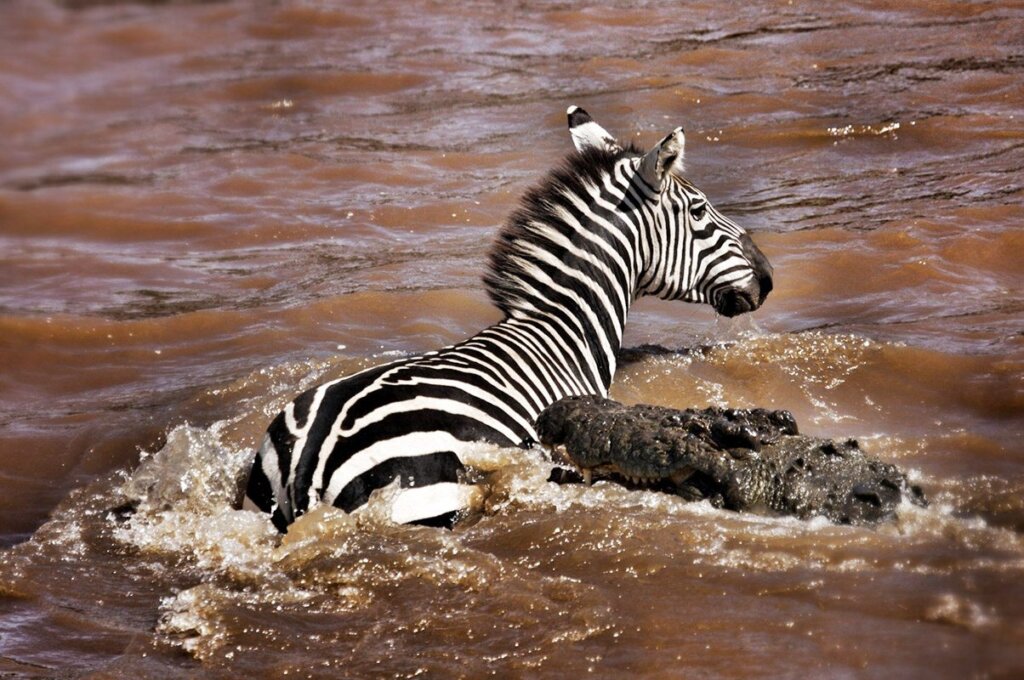
Myth
Some travelers think they’ll only see wildebeest.
Fact- The Great Migration brings Africa’s entire ecosystem to life. It’s one of the best all-around wildlife viewing experiences in Africa, where you can spot lions, cheetahs, and leopards, witness crocodiles lurking at dramatic river crossings, encounter elephants, giraffes, and buffalos across the plains, and see birds following the herds as the Great Migration unfolds.
What Most Travelers Get Wrong About the Great Migration
Here’s the biggest mistake travelers make:
Planning without expert local advice- The migration doesn’t follow a fixed calendar, and shifting weather patterns can change herd movements at any time, relying on generic information often leads to disappointment. Working with local safari specialists ensures correct timing, the right locations, flexible itineraries, and realistic expectations for an unforgettable experience.
so, is the great Migration Still Worth It in 2026? Absolutely. Once you understand the realities, not the myths the Great Migration becomes even more rewarding. It’s raw, unpredictable, emotional, and completely authentic. This is nature on its own terms, and that’s exactly what makes it special.
Contact us today and let’s plan your 2026 Great Migration safari the right way